
BPC-157, TB-500, and growth-hormone peptides. Supervised by a physician.
BPC-157 for tissue repair. Ipamorelin and CJC-1295 for growth-hormone optimization. PT-141 for libido. We protocol the peptides that have meaningful evidence, and skip the ones that don't.
Peptides are short chains of amino acids that signal specific receptors — more targeted than systemic hormones. At Magnolia Men's Health in Southlake, TX, we prescribe across four families: growth-hormone-releasing peptides (sermorelin, tesamorelin); tissue-repair peptides (BPC-157, TB-500); sexual-health peptides (PT-141 / bremelanotide); and topical regenerative peptides (GHK-Cu). $49/month membership covers physician oversight, prescription management, and follow-up labs. All peptides sourced exclusively from US-licensed 503A compounding pharmacies.
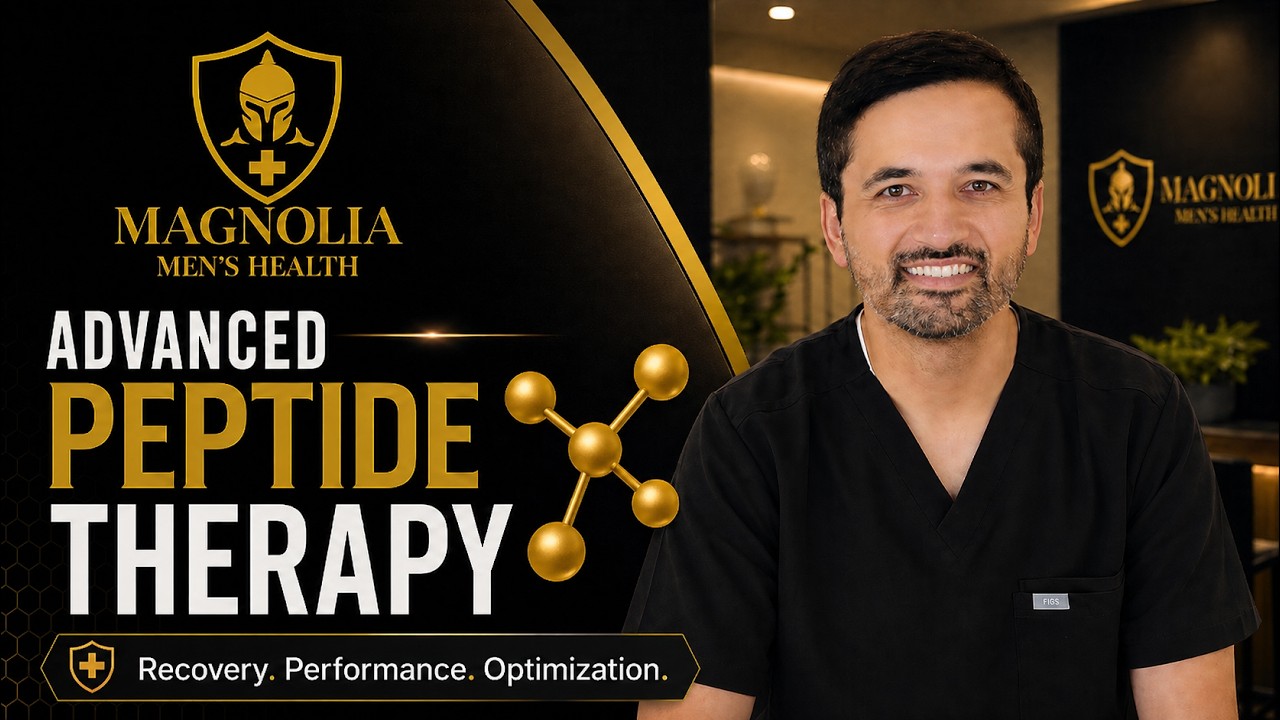

Peptides are short chains of amino acids that act as signaling molecules. The therapeutic peptides we use target specific biological pathways: tissue regeneration, growth-hormone-axis modulation, and centrally-acting libido enhancement. The category has been hyped and oversold, but used selectively, peptides are useful clinical tools.
The principle that drives our peptide protocols: a peptide should match a specific clinical goal. We don't stack indiscriminately and we don't recommend peptides that have neither evidence nor a defensible mechanism.

We pick what fits the clinical question, not what's trending.
Body Protective Compound. Tendon, ligament, and GI lining repair. 4–8 week protocols, often the first peptide considered for chronic tendinopathy.1
Thymosin beta-4 fragment. Soft-tissue regeneration; commonly paired with BPC-157 for orthopedic recovery protocols.2
Pulsatile GH release via dual mechanism (ghrelin mimetic + GHRH analog). Sleep, body composition, recovery. Standard 6-month protocol.
GHRH analog. Older, well-studied, more affordable GH-axis support.
FDA-approved GHRH analog for HIV-associated lipodystrophy.3 Used selectively off-label for visceral fat reduction in metabolic syndrome.
Centrally acting melanocortin agonist. Useful for psychogenic or mixed-component ED and for libido restoration when hormonal optimization alone falls short.4

Half the problem with the peptide market is the supply chain. Vials sold online as "research only" are often unverified, sometimes contaminated, and never accountable to a regulator.
Every peptide we use is sourced through a licensed compounding pharmacy with documented sterility and identity testing. You inject what the label says — at the dose your protocol calls for.
Most common. Mild injection-site reactions, transient headache, and brief fluid retention with GH-axis peptides during the first few weeks.
GH-axis peptides. Theoretical concern with stimulating GH/IGF-1 in the setting of malignancy. We screen for personal and family history before starting and monitor IGF-1 on protocol.
PT-141. Flushing, transient hypertension (about 6 mmHg), and nausea are well documented. Not for men with poorly controlled hypertension or recent cardiovascular events.


Most patients arrive at peptide therapy after some experience with testosterone or thyroid replacement, and the instinct is to think of peptides as "more hormones." That framing is wrong. Hormones — testosterone, cortisol, thyroxine — are systemic signaling molecules that touch nearly every tissue in the body. They produce broad effects and require careful monitoring of downstream consequences. Peptides are different. A therapeutic peptide is a short chain of amino acids — typically 2 to 50 residues — that binds a specific receptor with high selectivity. The downstream effects are narrower, the side-effect surface is smaller, and the dose ranges are usually well below the threshold of systemic disruption.
This is why peptides are useful as adjunct therapy more often than primary therapy. We rarely treat hypogonadism with peptides alone, but we routinely add growth-hormone-releasing peptides (sermorelin, tesamorelin) on top of testosterone replacement to improve sleep architecture, recovery markers, and visceral fat distribution. We rarely treat a chronic injury with BPC-157 alone, but we use it as a recovery accelerant alongside structured rehabilitation. The clinical question we ask before any peptide prescription: what specific signaling problem are we targeting, and is there evidence this peptide solves it?
Sermorelin is a synthetic analog of growth-hormone-releasing hormone (GHRH). It signals the pituitary to release endogenous growth hormone in physiologic pulses, mimicking what a younger pituitary does naturally. Originally FDA-approved as Geref, discontinued in 2008 for commercial reasons (not safety), it remains compoundable through 503A pharmacies via the previously-approved-drug pathway. Typical use: sleep quality, recovery after training, modest body composition shifts. Dosing is daily subcutaneous injection at bedtime, 200–500 mcg.
Tesamorelin (Egrifta SV, Egrifta WR) is FDA-approved for HIV-associated lipodystrophy. Off-label, it has the strongest peer-reviewed evidence among GH-axis peptides for visceral fat reduction in non-HIV populations with metabolic syndrome — published in the Journal of Clinical Endocrinology & Metabolism and elsewhere. We prescribe it selectively when visceral adiposity is the primary clinical target and other tools have plateaued.
Ipamorelin and CJC-1295 are commonly stacked as a ghrelin mimetic + GHRH analog combination, producing larger and more sustained GH pulses. Note: the FDA's Pharmacy Compounding Advisory Committee voted against adding either to the 503A bulks list in late 2024. Status remains restricted as of May 2026; we follow the regulatory map and update protocols accordingly.
BPC-157 (Body Protective Compound) is a 15-amino-acid peptide originally isolated from human gastric juice. Animal evidence is robust for tendon, ligament, and gastrointestinal lining repair; human evidence is more limited but growing. Common protocol: 4–8 weeks of subcutaneous injection adjacent to the injury site (or oral capsules for gut indications), typically 250–500 mcg twice daily. We use BPC-157 most often for chronic tendinopathy that has failed conservative management — Achilles, lateral epicondyle, rotator cuff partial tears.
TB-500 (a synthetic fragment of thymosin beta-4) is frequently paired with BPC-157 for orthopedic recovery. The mechanism involves actin-binding and angiogenic effects that support soft-tissue regeneration. Dosing is typically twice-weekly subcutaneous injection at 2–5 mg, for 4–6 weeks.
Both BPC-157 and TB-500 were removed from the FDA's Category 2 ("significant safety concerns") list on April 22, 2026. The Pharmacy Compounding Advisory Committee will vote on Category 1 status (the formal 503A bulks-list pathway) at its July 23–24, 2026 meeting. We track these decisions in real time.
PT-141 (bremelanotide / Vyleesi) is FDA-approved for premenopausal women with hypoactive sexual desire disorder. Off-label use in men is well-established for centrally-mediated libido restoration and for psychogenic or mixed-component erectile dysfunction. The mechanism is melanocortin-4 receptor agonism in the central nervous system — distinct from PDE-5 inhibitors, which act peripherally. Dosing is typically subcutaneous injection 30–60 minutes before sexual activity, or as a daily nasal spray protocol in some compounded formulations. Side effects include flushing, nausea, and transient blood-pressure elevation; we screen cardiovascular history before prescribing.
GHK-Cu (copper peptide) in topical formulations is on the FDA's Category 1 bulks list, available as creams and serums for skin repair, wound healing, and follicular health support. Injectable GHK-Cu remains in Category 2 pending review; we do not prescribe it injectable. Topical GHK-Cu is most often used as an adjunct to PRP for hair restoration protocols.
The single most important variable in peptide therapy that gets the least attention from patients is sourcing. A vial of "BPC-157" purchased from a research-chemicals website and injected at home is not the same product as the same nominal molecule prepared by a US-licensed 503A compounding pharmacy under USP <797> sterile-compounding standards. The first is unregulated, frequently mislabeled or impure, and shipped without temperature control. The second is third-party purity tested, prepared in a sterile cleanroom, refrigerated in transit, and prescribed by a licensed physician with specific dosing and monitoring instructions.
Every peptide we prescribe at Magnolia is sourced through partner 503A pharmacies that meet five criteria: USP <797> certification for sterile compounding; third-party purity testing on every batch with certificates of analysis available on request; refrigerated shipping where the molecule requires it; current good standing with the FDA; and willingness to attest in writing to the regulatory category of each compounded substance. We do not prescribe peptides sourced from research-chemical suppliers, gray-market vendors, or international pharmacies — regardless of price.
When sourced from licensed compounding pharmacies and dosed within physiologic ranges, the safety profile across the peptide families we prescribe is favorable. The most common side effects are mild: injection-site irritation (small wheal at the puncture point, typically resolves within 24 hours), occasional flushing or transient fatigue, and water retention with GH-axis peptides. Severe adverse events are rare in the published literature and rarer still in our clinical experience.
That said, we screen for several contraindications at every peptide intake: active malignancy (GH-axis peptides may stimulate growth of certain tumor types and are contraindicated until oncologic clearance); pregnancy or active fertility planning; uncontrolled diabetes (GH-axis peptides can increase insulin resistance transiently); recent cardiovascular events (PT-141 can transiently elevate blood pressure); and current immunosuppression (limited data, default to caution). We also baseline labs before starting most peptide protocols and recheck at 12–16 weeks: comprehensive metabolic panel, fasting insulin and glucose, IGF-1 (for GH-axis peptides), and CBC.
Our peptide membership is $49 per month. This covers physician oversight, prescription management, dose adjustments, and follow-up labs related to your peptide protocol. The peptides themselves are billed separately based on what's prescribed and the pharmacy's current pricing — typical ranges as of May 2026: sermorelin $80–$140/month, BPC-157 $120–$220/month, tesamorelin $250–$450/month, PT-141 (compounded) $80–$160/month, ipamorelin/CJC-1295 stack (where available) $180–$280/month. Pricing varies by dose, formulation, and pharmacy; we provide a written pharmacy estimate before any prescription is sent.
Insurance does not cover peptide compounding in the consumer-clinic context. The HSA/FSA card works for the membership and the labs but typically not for the peptide medication itself, because compounded peptides are not on the FDA-approved drug list that HSA administrators recognize. We can document the medical necessity if you want to attempt reimbursement; we don't make that decision for your administrator.
A typical first peptide visit starts with the same free testosterone check, body composition scan, and physician consultation that every Magnolia patient receives. We discuss your goals — tissue recovery, sleep optimization, libido restoration, body recomposition, post-injury rehab — and run any baseline labs we need that haven't been done in the last 90 days. We then map the goal to the peptide family with the strongest evidence for that target, write the prescription, and the pharmacy ships within 3–5 business days.
Injection technique is taught at the first peptide visit. Most peptides are subcutaneous: pinch a fold of skin near the navel or upper thigh, insert a tiny insulin-syringe needle (29–31 gauge) at a 90-degree angle, depress the plunger, withdraw. The whole sequence takes about 10 seconds. We provide all supplies (syringes, alcohol swabs, sharps container) and we'll watch you do the first injection in clinic before you take the kit home. For non-injectable peptides — oral BPC-157 capsules, PT-141 nasal spray, GHK-Cu topical — the instructions are even simpler.
Monitoring cadence depends on the peptide. Tissue-repair protocols (BPC-157, TB-500) are typically 4–8 week courses with a re-evaluation at the end and a decision point: stop, repeat, or transition to a different modality. GH-axis protocols (sermorelin, tesamorelin) are longer — typically 6 months at a time with quarterly lab rechecks (IGF-1, fasting glucose, lipids). PT-141 is dosed as needed with no routine lab monitoring. We text-message reminders for re-check labs and follow-up visits.
Not every clinical question is a peptide question. If your testosterone is 220 ng/dL and you're symptomatic, the answer is testosterone replacement, not sermorelin. If your BMI is 38 and you've never tried a structured weight-loss program, the answer is tirzepatide and a strength program, not a TB-500 stack. If your erectile dysfunction is purely vascular and you've never tried PDE-5 medication, the answer is sildenafil or daily tadalafil, not PT-141. We have a complete toolkit and we use the tool that fits the problem — the peptide hammer doesn't make every problem a nail.
For most of our patients, peptides are the second or third therapy added to a foundation that includes hormone optimization, structured training, nutrition adjustments, and sleep. They work best as a precision tool layered on top of solid baseline care — not as a replacement for the hard, slow work that produces durable health.
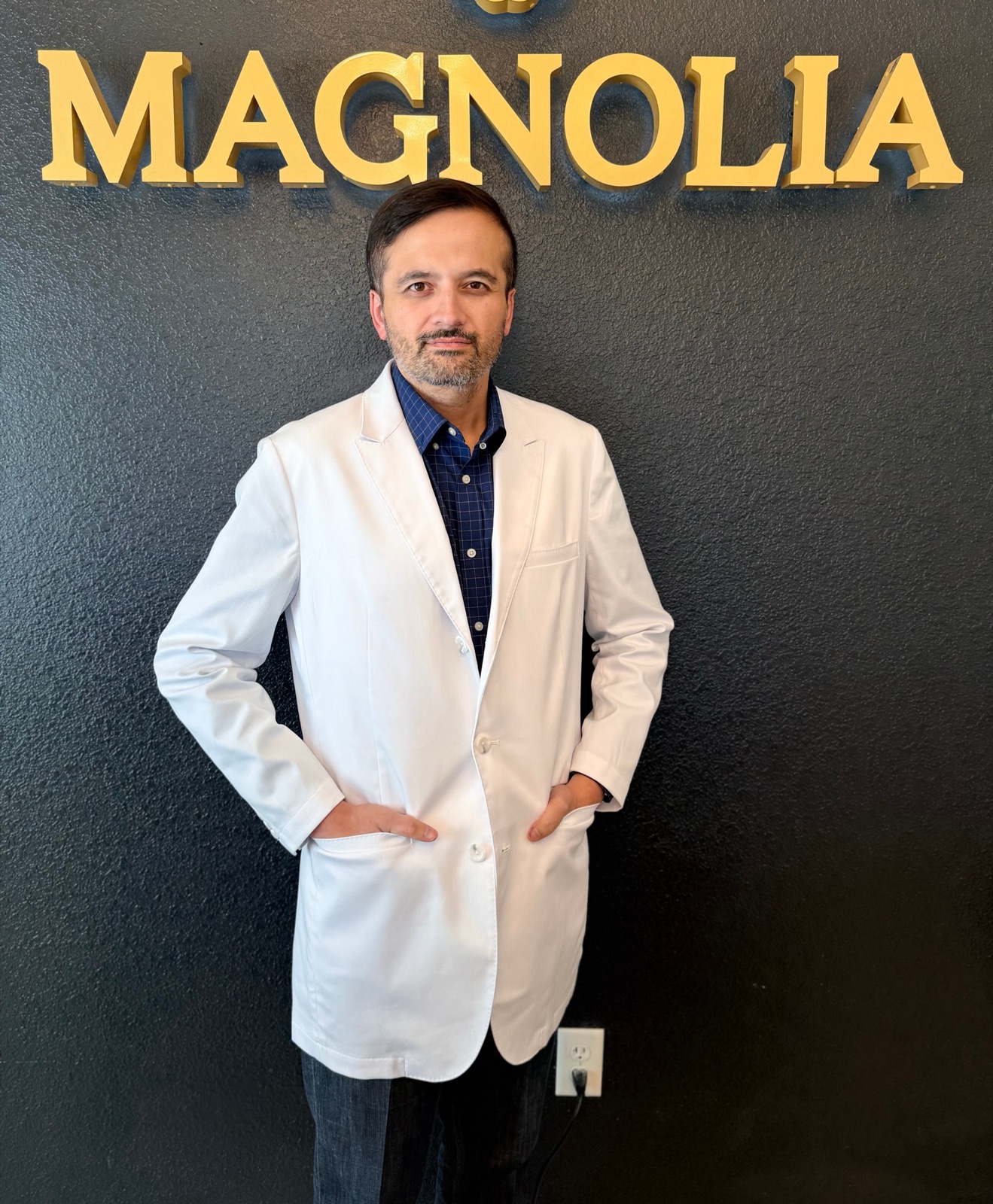
Dr. Abdullah is a board-certified internal medicine physician based in Southlake, TX, and an IFM-certified functional medicine practitioner. He focuses on men's hormone health — testosterone optimization, GLP-1 weight loss, sexual health, peptides, and longevity — and personally reviews and adjusts every protocol that leaves the clinic.
Fifteen-minute free first visit at our Southlake clinic. Serving Westlake, Trophy Club, Colleyville, Keller, Grapevine, Roanoke, and the broader Dallas–Fort Worth metro.
or call (817) 749-6946