
Diagnosis-led treatment. Supervised by a physician.
ED has four main drivers, vascular, hormonal, neurogenic, and psychogenic. We diagnose which apply, then build a protocol that fits. Most patients are surprised at how much medication isn't the only answer.
ED is the consistent inability to obtain or maintain an erection sufficient for satisfactory sexual activity. It is not one disease. It is the final common pathway of four overlapping mechanisms, and a careful workup tells you which of them apply.3
Vascular ED is the most common driver. The penile arteries are smaller than the coronaries, so atherosclerosis becomes symptomatic in the penis years before it threatens the heart. Hormonal ED involves low testosterone, thyroid dysfunction, or elevated prolactin. Neurogenic ED follows nerve injury (diabetes, prostatectomy, pelvic radiation, spinal cord pathology). Psychogenic ED stems from anxiety, depression, performance pressure, or relationship strain. Most men have more than one contributor.

The first visit is fifteen minutes with the medical director. We take a structured sexual and cardiovascular history, run an on-site testosterone test with same-day results, and order a focused diagnostic panel: total and free testosterone, SHBG, sensitive estradiol, fasting glucose and HbA1c, lipid panel, TSH, CBC, and PSA when age-appropriate. If the picture suggests cardiovascular involvement, we screen with a focused CV history and risk-factor review and refer for further imaging or stress testing when indicated.
A morning erection history (using an instrument like the IIEF-EF) anchors symptom severity in something objective. By the second visit, we have the data to recommend the modality, or modalities, that match the mechanisms we identified.
We use modalities that match the cause we identify. Most men start with one and add a second if response is incomplete.
Tadalafil and sildenafil potentiate the nitric-oxide / cGMP pathway that produces erection.3 Available as PRN (taken before activity) or daily low-dose tadalafil. Effective in 60–70% of men. Contraindicated with nitrates.
Low-intensity focused acoustic waves stimulate microvessel growth (neoangiogenesis) and tissue regeneration in penile tissue. Strongest evidence in mild-to-moderate vasculogenic ED.4 Multi-session series, no medication, no downtime.
Platelet-rich plasma drawn from your own blood is processed in-house and injected into specific regions of the penis. Growth factors support microvascular and tissue regeneration over weeks to months.5 Often layered with shockwave for vasculogenic cases.

For the P-Shot, we draw your blood at the start of your visit, spin it down on our in-clinic centrifuge, and concentrate the platelets ourselves. No outside lab, no shipping, no week-long wait.
The injection is performed under topical numbing in our procedure room. You're in and out in about an hour. Most men resume sexual activity at 24 hours.
If you've been to a chain or online prescription mill, you'll recognize the gaps. Here's what changes when a board-certified physician sets, reviews, and adjusts every protocol himself.
Same-day on-site testosterone test, focused sexual and cardiovascular history, and a fifteen-minute consultation with the medical director. We order the comprehensive baseline panel; this is typically billable to insurance.
Once labs are back we meet again to review them, identify the dominant mechanism (vascular, hormonal, neurogenic, psychogenic), and recommend the modality, or layered combination, that fits.
For PDE-5 inhibitors, we evaluate response and tolerability at 4 weeks. For shockwave or P-Shot, we re-assess penile blood flow and IIEF-EF at 6 to 12 weeks post-procedure and titrate the layered protocol from there.
PDE-5 inhibitors. Common side effects: headache, flushing, nasal congestion, mild dyspepsia. Less common: visual color tint (sildenafil), back or muscle ache (tadalafil). Absolute contraindication: concomitant nitrate use due to risk of severe hypotension. We review your full medication list at every visit.
Softwave shockwave. Non-invasive, drug-free. Most men describe sensation as a tapping pressure, no anesthesia required. Rare: transient bruising or mild discomfort post-session. Not appropriate during active genital infection.
P-Shot. Performed under topical numbing. Mild swelling for 24–48 hours; bruising in some men. Sexual activity can resume at 24 hours in most cases. Because PRP comes from your own blood, allergic reactions are exceptional.


We bill your insurance for the office visit and the diagnostic panel when clinical criteria are met. PDE-5 medications are sourced through a licensed compounding pharmacy.
Either way, your first visit is free. Testosterone check, body composition scan, and physician consultation. No charge. No commitment.
I tried Hims for a year. The pills worked sometimes but no one ever asked about my labs or my heart. At Magnolia I found out my testosterone was low and my LDL was 180. We treated both. Now medication works every time and my cardiologist gave me a clean stress test.
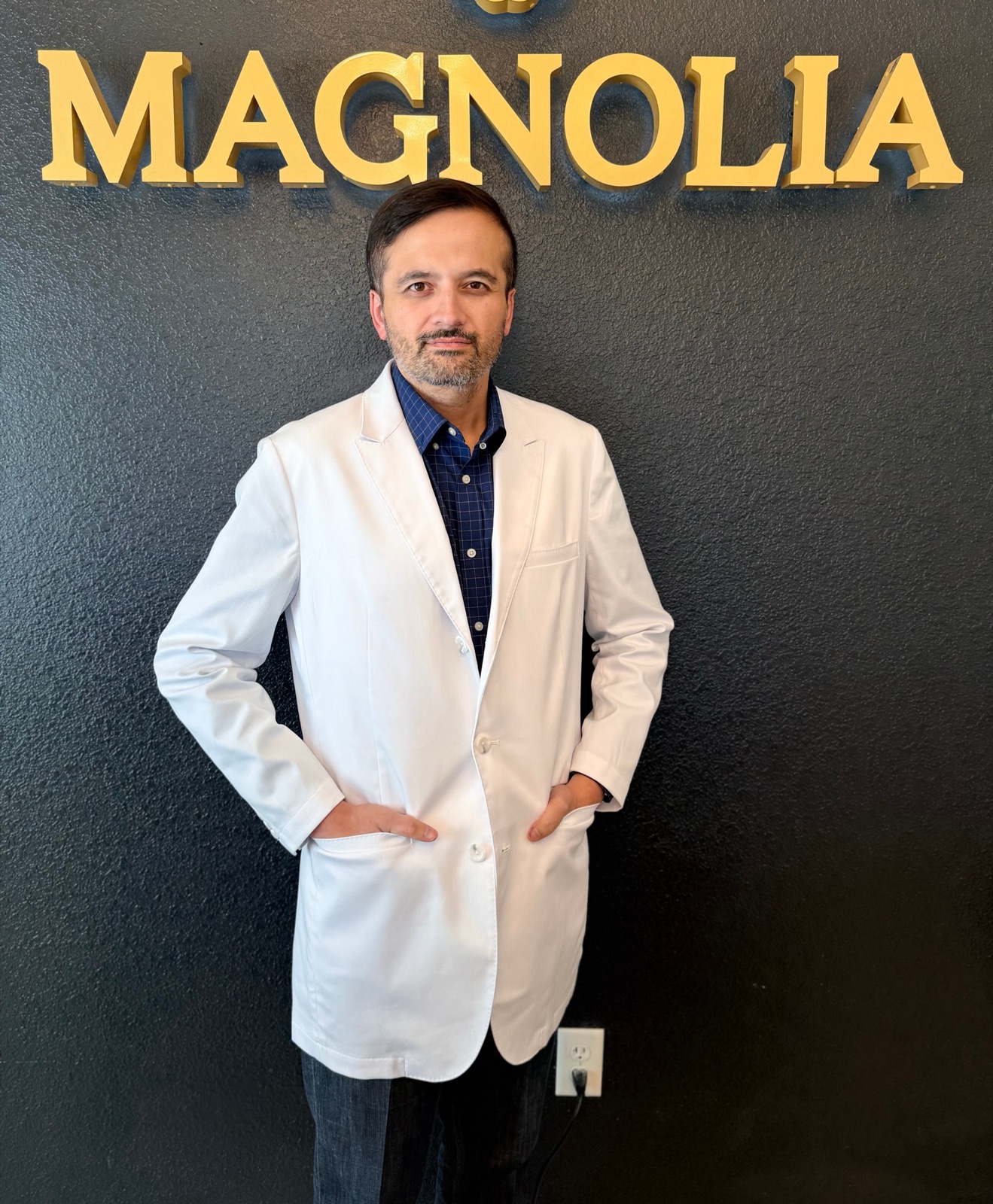
Dr. Abdullah is a board-certified internal medicine physician based in Southlake, TX, and an IFM-certified functional medicine practitioner. He focuses on men's hormone health — testosterone optimization, GLP-1 weight loss, sexual health, peptides, and longevity — and personally reviews and adjusts every protocol that leaves the clinic.
Fifteen-minute free first visit at our Southlake clinic. Serving Westlake, Trophy Club, Colleyville, Keller, Grapevine, Roanoke, and the broader Dallas–Fort Worth metro.
or call (817) 749-6946