
If you've spent any time on r/loseit or scrolling health TikTok, you've probably noticed something. Every other post is about Ozempic, Mounjaro, Wegovy, or Zepbound. The names blur together, but they come down to two molecules: semaglutide and tirzepatide. And every week in my Southlake clinic, a guy in his 40s asks me the same question. "Doc, which one's better for me?"
It's a fair question. But the honest answer is more nuanced than the glossy ads make it look. I've prescribed both extensively in our medical weight loss program at Magnolia Men's Health, and I've watched men respond beautifully to one and barely move on the other. The difference isn't just about pounds lost. It's about how your body, your hormones, and your specific metabolic situation match up to each drug. Let's get into the real comparison, with a lens specifically on what matters for men.
What's the Real Difference Between Semaglutide and Tirzepatide?
Semaglutide is a single-receptor GLP-1 agonist that mimics one gut hormone to suppress appetite and slow digestion. Tirzepatide is a dual-agonist that hits both GLP-1 and GIP receptors, giving it a broader metabolic effect. In simple terms, tirzepatide pulls more levers, which usually means stronger results.
Semaglutide hit the market first as Ozempic (for diabetes) and Wegovy (for weight loss). It binds to one receptor: GLP-1. That alone slows gastric emptying, calms hunger signals in the brain, and improves insulin sensitivity.
Tirzepatide, sold as Mounjaro and Zepbound, came later and added a second mechanism. It also activates GIP, glucose-dependent insulinotropic polypeptide. GIP works alongside GLP-1 to enhance insulin response after eating and influences how fat tissue stores and releases energy.
The practical takeaway? Tirzepatide is doing roughly twice the metabolic work. That's why head-to-head trials show it pulling ahead of semaglutide on nearly every endpoint. But more powerful doesn't automatically mean better for every man, and I'll explain why in a minute. If you want a deeper breakdown of the underlying drugs themselves, I went deep on this in my doctor's honest comparison of semaglutide vs tirzepatide.
Which One Helps Men Lose More Weight?
In direct trials, tirzepatide produced more weight loss than semaglutide. The SURPASS-2 study showed tirzepatide users lost up to 12.4% of body weight versus 6.2% on semaglutide at comparable doses. The SURMOUNT trials pushed losses even higher. Real-world data confirms this gap holds up in men too.
The numbers from the SURMOUNT trials on tirzepatide are kind of wild. At the maximum 15mg dose, participants lost an average of 22.5% body weight over 72 weeks. Compare that to STEP-1 data on semaglutide at 2.4mg, which showed roughly 14.9% body weight reduction over 68 weeks. That's a meaningful gap.
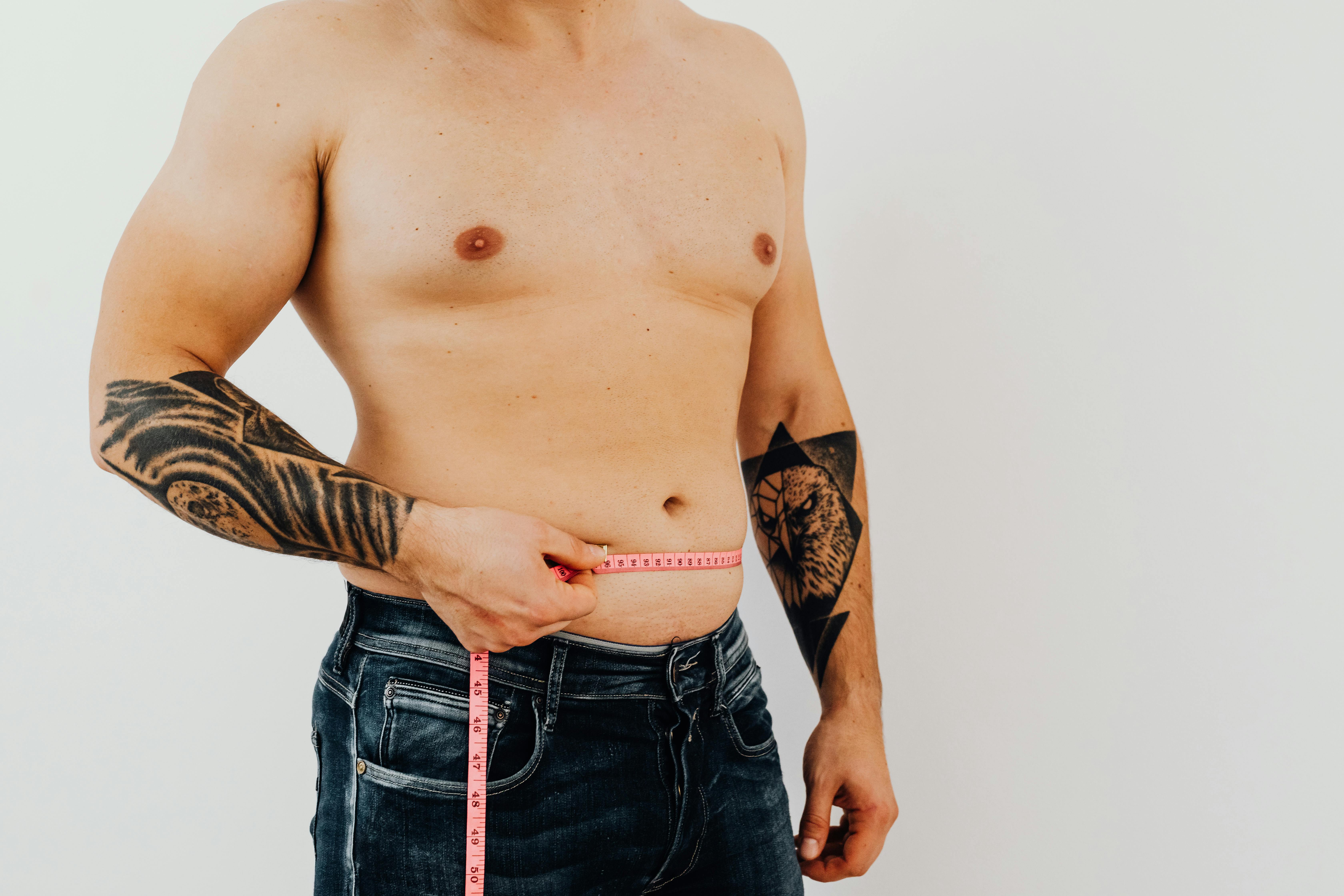
Now here's where it gets interesting for men specifically. Men tend to carry more visceral fat (the deep belly fat around your organs) than subcutaneous fat. Both drugs target visceral fat well, but tirzepatide's GIP component appears to do a better job of mobilizing this metabolically active fat.
I've seen this play out in my Dallas-Fort Worth patients consistently. The guys on tirzepatide tend to lose belly inches faster than the guys on semaglutide, even when their pound-for-pound losses are similar. If you're curious about why GLP-1s work so well for that stubborn male belly fat in the first place, I broke that down in detail in my piece on whether GLP-1 medications help men lose stubborn belly fat.
Does One Work Better for Men with Diabetes or Insulin Resistance?
Tirzepatide tends to outperform semaglutide for men with type 2 diabetes or significant insulin resistance. Its dual GLP-1/GIP action drops A1C more aggressively, often by 1.5-2.5 points compared to 1.0-1.8 points with semaglutide. For pre-diabetic men, both work well, but tirzepatide gives you more headroom.
Insulin resistance is something I screen for in nearly every man who walks through my door, even the ones who look healthy on the outside. Why? Because metabolic dysfunction is sneaky, and it often shows up as low testosterone, fatigue, or stubborn weight gain long before diabetes does. I wrote a whole piece on insulin resistance in men and why it matters if you want to understand the bigger picture.
For the man with metabolic syndrome (high triglycerides, high blood pressure, central obesity, low HDL), tirzepatide's broader receptor activity tends to move all those markers faster. I've watched fasting glucose drop 25 points in three months on tirzepatide where semaglutide moved it 12 points in the same window.
That said, semaglutide is no slouch. It still beats every oral diabetes medication on the combined metric of weight loss and A1C reduction. If your insurance only covers semaglutide and not tirzepatide, you're not losing the war. You're just choosing a slightly less aggressive weapon.
How Do Side Effects Compare for Men?
Both drugs share a similar side effect profile: nausea, constipation, fatigue, and occasional GI distress, especially during dose escalations. Tirzepatide tends to be slightly better tolerated in head-to-head trials, but both can cause issues if titrated too quickly. Men with sensitive stomachs often do better starting on semaglutide.
The most common complaints I hear from my Southlake patients are bloating after meals, nausea in the first three days after each weekly injection, and constipation that builds up over a few weeks. These are dose-dependent. If we go too fast on titration, the GI tract pushes back hard.
What I've noticed clinically is that men in their 40s and 50s often handle tirzepatide better than expected. The added GIP activity seems to soften some of the GI hit you get from pure GLP-1 agonism. Younger guys (under 35) sometimes report stronger nausea on semaglutide, possibly because of differences in gastric motility.
There's also the sulfur-burp phenomenon. Yes, it's real, and yes, it happens with both drugs. Eating smaller, lower-fat meals usually fixes it within a week. One important note though: muscle loss can happen on either drug if you're not eating enough protein or training resistance. This is why I almost always pair GLP-1 therapy with a strength training plan and a high-protein diet of at least 0.8g per pound of goal body weight.
Which GLP-1 Is Better for Men with Low Testosterone?
For men with low testosterone tied to obesity or insulin resistance, tirzepatide often produces faster testosterone recovery than semaglutide because it improves metabolic health more dramatically. But the real answer depends on whether you also need TRT, or whether you just need to lose the fat that's tanking your hormones.
The connection between body fat and testosterone is one of the most underappreciated topics in men's health. Visceral fat is hormonally active. It produces aromatase, which converts your testosterone into estrogen. So the more belly fat you carry, the lower your testosterone tends to run. I went into this dynamic at length in my article on how GLP-1 therapy affects testosterone levels in men.
What I see in my own practice is consistent. A guy comes in at 250 pounds with a total testosterone of 280 ng/dL. We start him on tirzepatide. Six months later he's at 210 pounds, and his testosterone has climbed to 480 ng/dL without any TRT. That's the power of fixing the underlying metabolic problem first.
But (and this is a big but) some men have low testosterone independent of their weight. For those guys, GLP-1 alone won't be enough. You're going to need testosterone replacement therapy too. If you're trying to figure out which camp you fall into, my piece on testosterone and weight loss walks through the decision framework.
What About Cost and Availability in 2026?
As of April 2026, brand-name Wegovy runs about $1,300/month and brand Zepbound around $1,060/month without insurance. Compounded versions through licensed pharmacies typically cost $200-450/month. Insurance coverage has improved for both, but pre-authorization remains a hassle for most men under 50.
The compounding situation has shifted a lot in the last year. After the FDA removed both semaglutide and tirzepatide from the official shortage list, compounding access narrowed. But personalized formulations are still available through legitimate 503A pharmacies if you're working with a real physician who's customizing your protocol.
Here's what I tell my Dallas-Fort Worth patients. If your insurance covers brand-name Zepbound or Wegovy, take it. The Eli Lilly Direct and Novo Nordisk savings programs have made these surprisingly accessible. If insurance doesn't cover it, compounded options through a vetted clinic are still safe when sourced correctly. The horror stories online almost always involve sketchy pharmacies with no oversight. That's not what we do at Magnolia Men's Health.
If price is the deal-breaker, semaglutide compounded is usually a bit cheaper than tirzepatide compounded. Sometimes the budget answer wins out over the "best on paper" answer.
Which One Should You Actually Pick?
For most men, tirzepatide is the more effective choice for weight loss and metabolic improvement. Semaglutide remains a strong, slightly milder alternative with more long-term safety data. Pick tirzepatide if you have over 40 pounds to lose, type 2 diabetes, or significant insulin resistance. Pick semaglutide if you have a sensitive GI system or budget concerns.
I'll be direct: I prescribe tirzepatide more often than semaglutide right now because the data is just stronger. But I've also kept plenty of patients on semaglutide who are responding beautifully and don't want to switch. The "best" GLP-1 is the one you'll actually stay on consistently.
Other factors I weigh with each man include existing medications, history of pancreatitis or thyroid issues, travel schedule, and how much weight you actually need to lose. For men who only need to drop 10-15 pounds, I sometimes recommend a slower, lower-dose approach with semaglutide rather than going all-in on tirzepatide. Smaller goals don't always require the strongest tool.
If you're dealing with weight gain that came on after 40 and won't budge, my piece on why weight loss gets harder after 40 explains why a multi-pronged approach (GLP-1 plus hormone optimization plus strength training) usually works better than any single drug. Our medical weight loss program in Southlake is built around exactly that combination.
Frequently Asked Questions
Can I switch from semaglutide to tirzepatide?
Yes, and many men do once they plateau on semaglutide. The transition usually takes 1-2 weeks of overlap or a brief pause before starting tirzepatide at a low dose. Your provider will customize the conversion based on your current dose.
Is one drug safer than the other?
Both have similar safety profiles. Long-term data is more extensive for semaglutide simply because it's been around longer. Both carry warnings about thyroid C-cell tumors and pancreatitis, but the absolute risk for both is low in screened patients.
Will I gain the weight back if I stop?
If you stop without a maintenance plan, weight regain is likely. Studies show 60-70% of lost weight returns within a year of discontinuation. This is why I focus on muscle building and metabolic conditioning during treatment, so you can taper off successfully.
Can I take TRT and a GLP-1 at the same time?
Absolutely. Many of my patients do exactly this. Combining testosterone optimization with GLP-1 therapy often gives faster, better results than either approach alone. We monitor labs every 90 days to make sure both are working in harmony.
How fast will I see results on either drug?
Most men notice appetite suppression within the first week. Visible weight loss usually starts around weeks 4-6, with significant changes by months 3-6. Tirzepatide tends to produce faster initial losses, but both eventually plateau if the protocol isn't optimized.
Ready to Figure Out Which One Fits Your Life?
If you've been stuck on the fence about which GLP-1 makes sense for you, the cleanest path forward is a real conversation with a physician who actually treats men's metabolic health (not a 5-minute online questionnaire). At Magnolia Men's Health in Southlake, we'll review your labs, your goals, your medical history, and your budget, then build a plan that fits your life. Schedule a free consultation and let's figure out which medication, dose, and overall strategy actually moves the needle for you.