
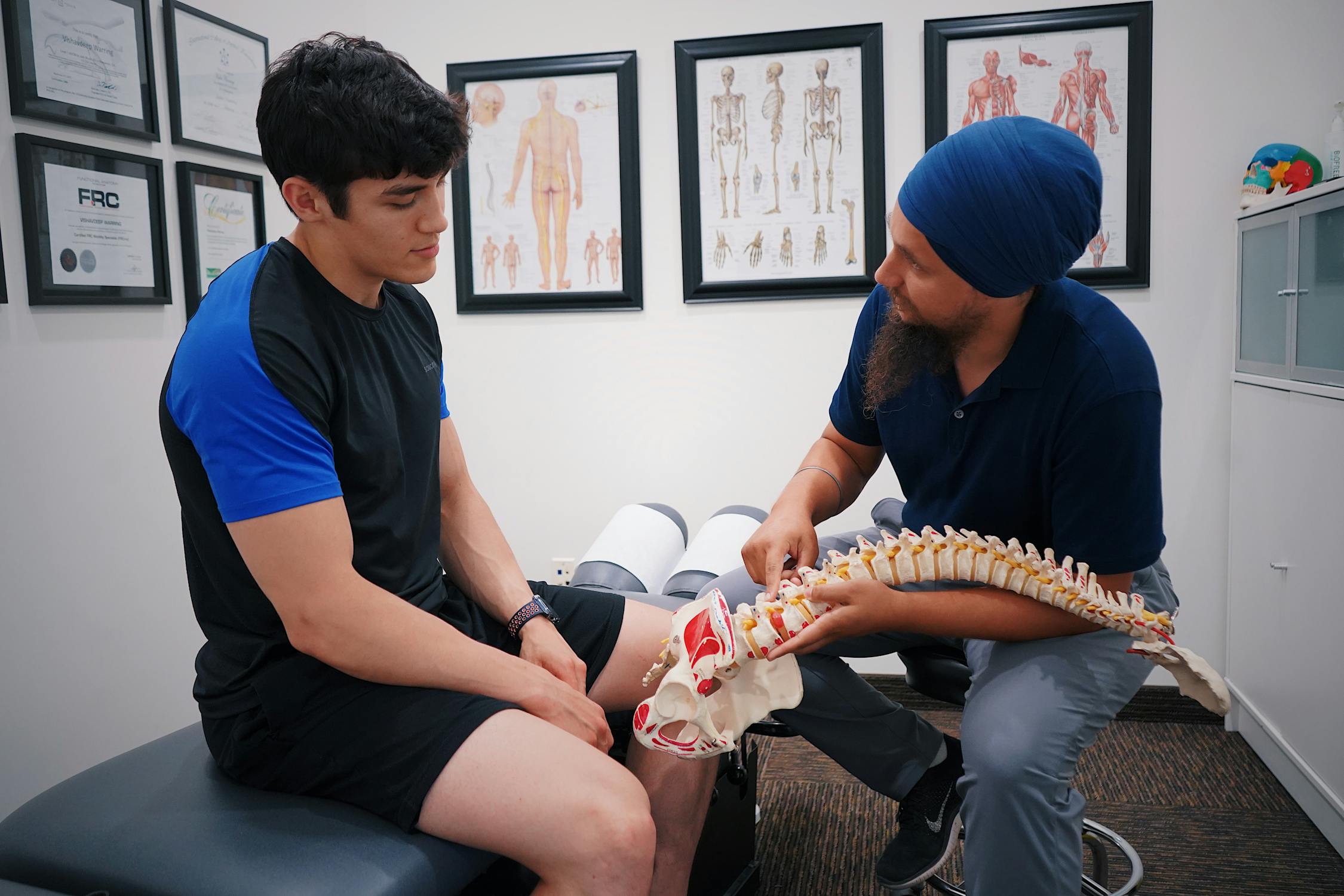
Here's something I see in my clinic almost every week. A guy walks in, sits down, and after about ten minutes of talking about "general health stuff," he finally gets to the real reason he's here. Erectile dysfunction. And almost every time, he says the same thing: "I don't understand why this is happening to me."
That question right there is actually the most important one. Because if you don't understand why ED is happening, you're just slapping a band-aid on a problem that's trying to tell you something. And that's where most conventional approaches get it wrong.
I'm Dr. Farhan Abdullah, and at Magnolia Men's Health in Southlake, TX, I take a functional medicine approach to erectile dysfunction. That means I'm less interested in handing you a pill and more interested in figuring out what your body is actually trying to say.
What Actually Causes Erectile Dysfunction?
Erectile dysfunction happens when blood flow, nerve signaling, hormonal balance, or psychological factors (or some combination of all four) aren't working the way they should. It's rarely just one thing, and the root cause varies wildly from one guy to the next.
Most doctors will tell you ED is a blood flow problem. And sure, that's part of it. Your erection depends on healthy blood vessels relaxing and filling with blood. But reducing it to "just a plumbing issue" misses the bigger picture entirely.
Think about it this way. Your body needs the right hormonal signals to initiate arousal, healthy endothelial cells lining your blood vessels to allow proper dilation, intact nerve pathways to carry signals from your brain, and a psychological state that isn't drowning in stress or anxiety. When any of those pieces break down, things stop working. The tricky part? Figuring out which piece (or pieces) are the problem.
Is ED Really Just a Blood Flow Problem?
Not even close. While vascular issues are the most common physical cause, ED can stem from hormonal imbalances, metabolic dysfunction, neurological issues, medication side effects, or chronic inflammation. A functional medicine evaluation looks at all of these simultaneously.
I've had patients come in with "normal" lab work from their primary care doctor who still couldn't get an erection. Know why? Because their doctor checked total testosterone and called it a day. They never looked at free testosterone levels, never checked estradiol, never evaluated their thyroid, never measured their fasting insulin. The standard approach misses so much.
Vascular health is definitely important. But here's what a lot of guys don't realize: ED is often the first sign of cardiovascular disease. The blood vessels in your penis are smaller than the ones in your heart. So they show damage first. If you're experiencing ED at 42, that's your body waving a red flag about your heart health five to ten years before a cardiologist would catch it. That's not something to ignore.
How Do Hormones Affect Erectile Function?
Testosterone is the primary hormonal driver of male sexual function, but it doesn't work alone. Low testosterone, elevated estrogen, high cortisol, thyroid dysfunction, and insulin resistance can all independently contribute to ED. Fixing one without addressing the others often leads to incomplete results.
I wrote a detailed post about whether low testosterone causes ED, and the short answer is yes, it absolutely can. But it's not always that simple.
Here in my Southlake practice, I regularly see guys whose testosterone is technically "in range" but sitting at the bottom of that range. Their doctor told them they're fine. They don't feel fine. They feel like garbage. And their erections reflect that.
Then there's cortisol, the stress hormone. When cortisol stays chronically elevated (and living in the DFW metroplex with that commute, plenty of guys are stressed), it actively suppresses testosterone production. It also raises blood sugar, promotes belly fat storage, and damages blood vessel walls. All of which make ED worse.
And don't even get me started on insulin resistance. This one flies under the radar constantly. When your cells stop responding properly to insulin, it creates a cascade of inflammatory damage that destroys the endothelial cells lining your blood vessels. Those are the exact cells responsible for producing nitric oxide, the molecule that makes erections happen. No nitric oxide, no erection. Simple as that.
Why Does ED Happen to Younger Men?
ED in men under 50 is increasingly common, driven by sedentary lifestyles, poor sleep, chronic stress, metabolic dysfunction, and environmental toxin exposure. It's not a normal part of aging at 35 or 40, and it almost always signals something treatable.
I covered this topic extensively in my post about erectile dysfunction in men under 50, and it's one of the most common searches I see from guys in the Dallas-Fort Worth area.
The reality? We're seeing ED in younger and younger men. Part of it is lifestyle. We sit all day, we eat processed food, we sleep five hours a night and think that's normal. Part of it is environmental. Plastics, pesticides, and endocrine disruptors in our water and food supply are actively lowering testosterone levels across the male population. Studies have shown that men today have significantly lower testosterone levels than men the same age 20 years ago.
And then there's the psychological component. Performance anxiety is real. Porn-induced erectile dysfunction is real. Relationship stress is real. These aren't things to dismiss or feel embarrassed about. They're legitimate medical factors that deserve attention.
What Does a Functional Medicine Approach to ED Look Like?
A functional medicine ED evaluation includes comprehensive hormone panels, metabolic markers, inflammatory markers, cardiovascular risk assessment, and a detailed lifestyle history. The goal is to find every contributing factor, not just the most obvious one.
When a patient comes to see me at our Southlake clinic, I'm not reaching for a prescription pad first. I'm ordering labs that most doctors never run. We're looking at free and total testosterone, SHBG, estradiol, DHEA-S, thyroid panel, fasting insulin, hemoglobin A1c, inflammatory markers like hs-CRP, and a complete metabolic panel.
Then we sit down and actually talk. What does your diet look like? How's your sleep? Are you exercising? What medications are you on? (By the way, certain blood pressure meds, SSRIs, and even antihistamines can contribute to ED.) What's your stress level on a scale of one to ten? How's the relationship?
All of that matters. Every bit of it. Because ED is almost never caused by one single thing. It's usually three or four factors stacking on top of each other. And if you only address one, you'll get mediocre results at best.
What Treatment Options Actually Work?
Effective ED treatment depends entirely on the root cause. Options range from hormone optimization and metabolic correction to regenerative therapies like penile rejuvenation treatments, peptide therapy, and lifestyle modification. The best outcomes come from combining multiple approaches.
Once we know what's driving your ED, we can build a treatment plan that actually makes sense. For some guys, testosterone replacement therapy is the answer. Their levels are in the tank, and bringing them back up restores function relatively quickly.
For others, we might look at SoftWave therapy or the P-Shot to actually regenerate blood vessel tissue and improve blood flow at the source. These are regenerative treatments that address the structural problem, not just the symptom. I've compared P-Shot versus SoftWave therapy in detail if you want to dig into which one might fit your situation.
Peptides like PT-141 (bremelanotide) can help with libido and arousal from a neurological angle, working through melanocortin receptors in the brain rather than just pushing blood flow. It's a completely different mechanism than Viagra or Cialis, and for some men, it works when those medications don't.
And yes, sometimes the answer involves addressing metabolic health first. Getting insulin resistance under control, optimizing thyroid function, reducing inflammation, cleaning up the diet, prioritizing sleep. Boring? Maybe. Effective? Absolutely.
When Should You See a Doctor About ED?
You should see a doctor about ED when it happens consistently (not just once after a stressful week), when it's accompanied by other symptoms like fatigue or weight gain, or when it's affecting your confidence and relationships. Earlier is always better than later.
Look, I get it. Nobody wants to talk about this. But here's what I tell every guy who finally works up the courage to come see me: you're not broken, and you're definitely not alone. ED affects roughly 30 million men in the United States. That's not a rare condition. That's practically an epidemic.
And remember what I said earlier about ED being an early warning sign for cardiovascular disease? That alone is reason enough to get evaluated. You're not just protecting your sex life. You're potentially catching a heart problem years before it becomes dangerous.
Frequently Asked Questions
Can erectile dysfunction be completely reversed?
Yes, in many cases. When ED is caused by hormonal imbalances, metabolic issues, or lifestyle factors, addressing the root cause can fully restore function.
Is erectile dysfunction just psychological?
Sometimes, but usually not entirely. Most men have a combination of physical and psychological factors. A thorough evaluation can sort out which is which.
Do I need Viagra if I have ED?
Not necessarily. PDE5 inhibitors like Viagra treat the symptom, not the cause. Functional medicine aims to fix the underlying problem so you may not need medication long-term.
At what age is erectile dysfunction considered normal?
ED isn't "normal" at any age. While risk increases with age, consistent erectile dysfunction always indicates something worth investigating.
How long does it take to see improvement with functional medicine treatment?
Most men notice improvements within four to eight weeks of starting a targeted treatment plan, though full optimization can take three to six months.
If you're dealing with ED and want answers beyond "just take this pill," I'd love to help you figure out what's really going on. Book a free consultation at Magnolia Men's Health, and let's get to the bottom of it together.