
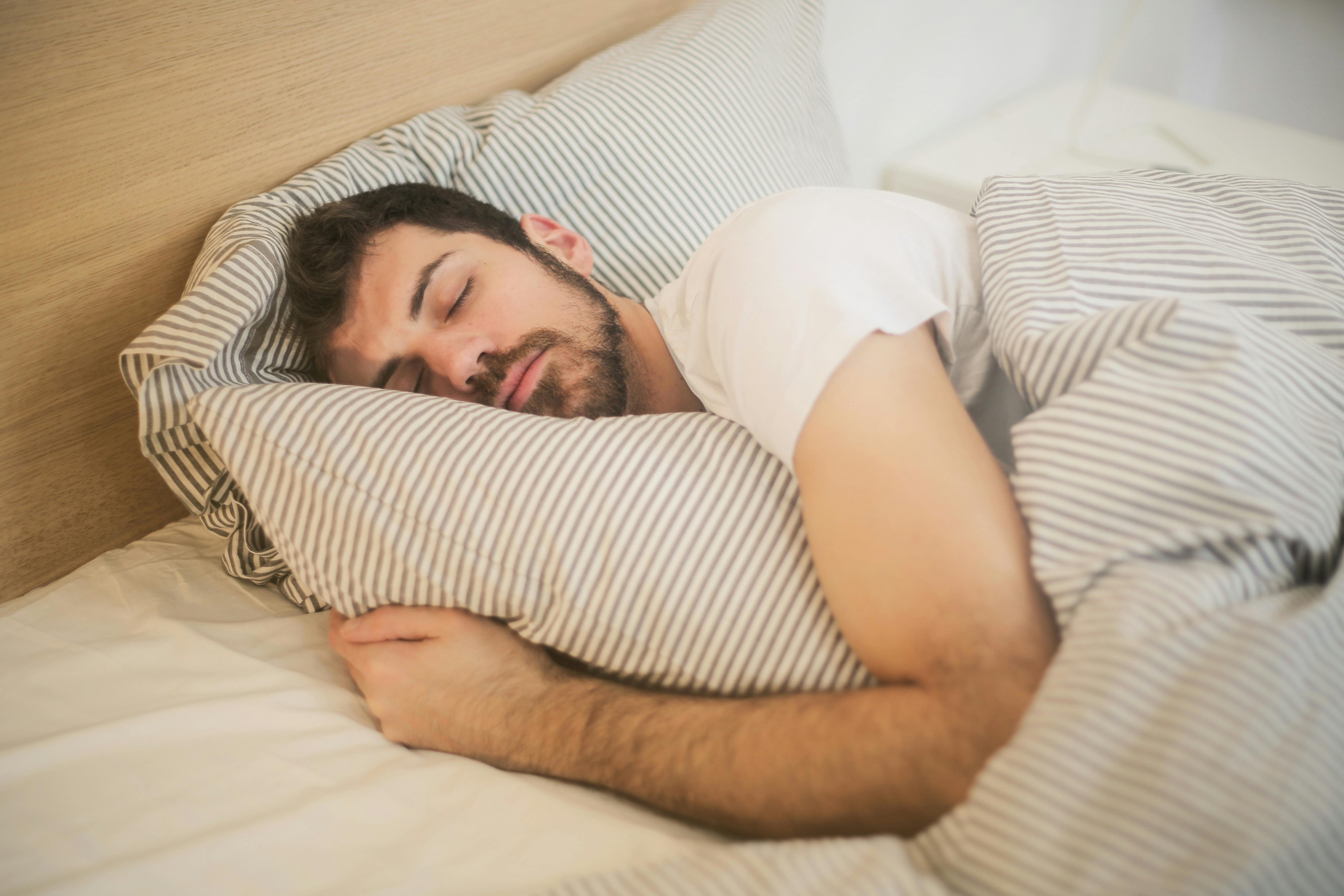
Here's something I hear in my office at least a few times a week: "Doc, I'm exhausted, but I can't sleep." Or the flip side: "I sleep eight hours and still feel like I got hit by a truck." Sound familiar? If you're a guy over 35 dealing with lousy sleep, there's a real chance your testosterone levels are tangled up in the mess.
I'm Dr. Farhan Abdullah, and at Magnolia Men's Health in Southlake, TX, I see this connection between testosterone and sleep play out constantly. It's one of those chicken-or-egg situations that most doctors never bother to untangle. But it matters. A lot.
How Are Testosterone and Sleep Connected?
Testosterone and sleep have a bidirectional relationship, meaning each one directly influences the other. Your body produces the majority of its daily testosterone during deep sleep, particularly during the REM stages. When sleep quality drops, testosterone production tanks right along with it.
A well-known study published in the Journal of the American Medical Association (JAMA) showed that young, healthy men who were restricted to five hours of sleep per night for just one week experienced a 10-15% drop in testosterone levels. That's the hormonal equivalent of aging 10 to 15 years in a single week. Pretty wild when you think about it.
And it goes the other way too. Men with clinically low testosterone often report fragmented sleep, difficulty falling asleep, and feeling unrested even after what should've been a full night. So you end up in this brutal loop: bad sleep kills your testosterone, and low testosterone makes your sleep worse. Nobody wins.
What Does Low Testosterone Do to Your Sleep?
Low testosterone disrupts sleep architecture in several measurable ways. Men with low T spend less time in deep, restorative sleep stages and more time in lighter sleep that doesn't recharge the body or brain effectively. This often shows up as frequent nighttime waking.
I've had patients tell me they're waking up three, four, sometimes five times a night. They'll blame it on needing to use the bathroom, or stress, or just "getting older." And sure, sometimes those things contribute. But when we check their labs and their total testosterone is sitting at 250 ng/dL, suddenly the picture gets a lot clearer.
Some of the most common sleep-related complaints I hear from guys with low testosterone symptoms include:
- Waking up multiple times throughout the night
- Trouble falling asleep even when they're physically tired
- Never feeling rested regardless of hours in bed
- Daytime sleepiness that coffee can't fix
- Increased irritability and brain fog from sleep deprivation
That last one hits hard. The brain fog from low testosterone gets amplified when you're also sleep-deprived. Guys start wondering if something's seriously wrong with them. They're forgetting meetings, zoning out during conversations, losing their edge at work. Most of the time, it's the combination of low T and wrecked sleep feeding off each other.
Does Sleep Apnea Play a Role?
Sleep apnea and low testosterone frequently coexist, and the relationship between them is more complex than most guys realize. Obstructive sleep apnea (OSA) fragments your sleep dozens or even hundreds of times per night, which directly suppresses testosterone production during those critical deep sleep windows.
Here's the thing I always make sure to explain to my patients here in Southlake: if you've got untreated sleep apnea, fixing the testosterone alone won't solve your sleep problems. You've got to address both. That's why I always screen for sleep apnea before starting any testosterone replacement therapy. It just doesn't make sense to fill a bucket that's got a hole in the bottom.
Research published in the European Respiratory Journal found that men with moderate to severe OSA had significantly lower testosterone levels compared to men without sleep apnea, even after controlling for age and BMI. Treating the sleep apnea with CPAP alone partially restored testosterone levels in some men, but not all of them. The ones who still had low T after CPAP? Those are the guys who really benefit from TRT as an add-on.
Can Starting TRT Actually Help You Sleep Better?
For many men with confirmed low testosterone, starting TRT can meaningfully improve sleep quality within the first several weeks to months of treatment. Patients commonly report falling asleep faster, staying asleep longer, and waking up feeling genuinely refreshed for the first time in years.
I can't tell you how many guys have sat in my office six weeks into treatment and said something like, "I didn't even realize how bad my sleep was until it got better." That's one of those moments that makes this work worth it.
A 2014 study in the Asian Journal of Andrology found that testosterone therapy improved subjective sleep quality in hypogonadal men, with the most notable improvements in sleep efficiency and reductions in nighttime wakefulness. These weren't guys who suddenly needed sleeping pills. Their hormones got back on track, and their bodies remembered how to sleep properly.
Now, I should be straight with you. TRT isn't a sleeping pill. If your sleep issues are primarily caused by stress, terrible sleep hygiene, or too much screen time at midnight (we've all been there), testosterone isn't going to magically fix that. But if your foundation is low T driving the problem, getting your levels optimized can be the thing that finally breaks the cycle.
What Other Symptoms Improve When Sleep Gets Better on TRT?
Better sleep from optimized testosterone creates a cascade of improvements that go way beyond just feeling rested. When you're actually recovering at night, your energy, mood, body composition, and cognitive function all start shifting in the right direction. It's like a domino effect.
The guys who come to me complaining about constant fatigue often see that improve dramatically once their sleep normalizes on TRT. Same with mood. I've had patients whose wives tell them they're "a different person" after a couple months. And they'll say, "I think I'm just sleeping better." They are. But the testosterone is what made the sleep possible.
Improved sleep on TRT also helps with:
- Better workout recovery and muscle gains
- Reduced cortisol levels, which further supports testosterone production
- Sharper mental clarity and focus during the day
- Improved mood and reduced feelings of depression and anxiety
- Healthier metabolism and easier weight management
It's really hard to separate sleep from everything else in the body. When one system comes back online, everything else benefits.
What Should You Do If You Think Low T Is Wrecking Your Sleep?
The first step is getting proper bloodwork done to check your testosterone levels, ideally drawn in the morning when testosterone peaks naturally. You'll want to know your total and free testosterone, along with other markers that paint the full picture.
Here's what I recommend if you're in the Dallas-Fort Worth area and dealing with this:
First, don't just accept "your levels are normal" at face value. I've written about this before, but the reference ranges most labs use are incredibly broad. A testosterone level of 300 ng/dL is technically "normal," but it's the normal of an 80-year-old man. If you're 42 and sitting at 300, that's a problem. We talk more about this in our post on what low testosterone actually feels like.
Second, get screened for sleep apnea if you snore, if your partner says you stop breathing at night, or if you're waking up with headaches. This is non-negotiable. We need to know what we're dealing with before starting treatment.
Third, come talk to someone who actually specializes in men's hormonal health. Your primary care doc is great for a lot of things, but optimizing testosterone and sleep together requires a more focused approach. That's what we do at Magnolia Men's Health.
Simple Sleep Habits That Support Healthy Testosterone
While you're getting your hormones evaluated, there are several evidence-based sleep practices that support testosterone production naturally. These won't replace TRT if you genuinely need it, but they'll make whatever treatment you do pursue more effective.
Keep your bedroom cold. Seriously, between 65 and 68 degrees. Your body needs a temperature drop to initiate deep sleep, and deep sleep is when testosterone gets produced. A warm room works against you on both fronts.
Cut screens at least 30 minutes before bed. The blue light suppresses melatonin, which delays sleep onset and compresses your deep sleep window. I know, everyone says this. I'm saying it again because almost nobody actually does it.
Watch the alcohol. A couple drinks might make you fall asleep faster, but alcohol absolutely destroys your sleep architecture. It fragments REM sleep, which is where testosterone production peaks. If you're already running low on T, adding alcohol to the mix is like pouring gasoline on a fire.
Try to keep a consistent sleep schedule, even on weekends. Your testosterone production follows a circadian rhythm, and that rhythm works best when it knows what to expect. Sleeping in until noon on Saturday might feel great, but it throws off the whole system.
FAQ
Does low testosterone cause insomnia?
Low testosterone doesn't cause classical insomnia in most cases, but it frequently disrupts sleep quality, causes nighttime waking, and reduces time spent in deep, restorative sleep stages.
How quickly does sleep improve after starting TRT?
Most men notice sleep improvements within 3 to 6 weeks of starting TRT, though full benefits often develop over 2 to 3 months as hormone levels stabilize.
Can too much testosterone hurt your sleep?
Yes. Supraphysiologic testosterone doses can worsen sleep apnea and cause restlessness. Proper monitoring with regular lab work keeps levels in the optimal range.
Should I treat sleep apnea before starting TRT?
Ideally, yes. Addressing sleep apnea first or simultaneously with TRT gives the best outcomes. TRT alone won't fix sleep apnea, and untreated OSA blunts testosterone production.
Is melatonin safe to take with TRT?
Low-dose melatonin (0.5 to 1 mg) is generally safe alongside TRT. Always discuss supplements with your doctor, but melatonin doesn't interact negatively with testosterone therapy in most cases.
If you're stuck in that cycle of bad sleep, low energy, and feeling like you're running on fumes, it might be time to check your testosterone. This is fixable. Book a free consultation with us at Magnolia Men's Health and let's figure out what's actually going on.