
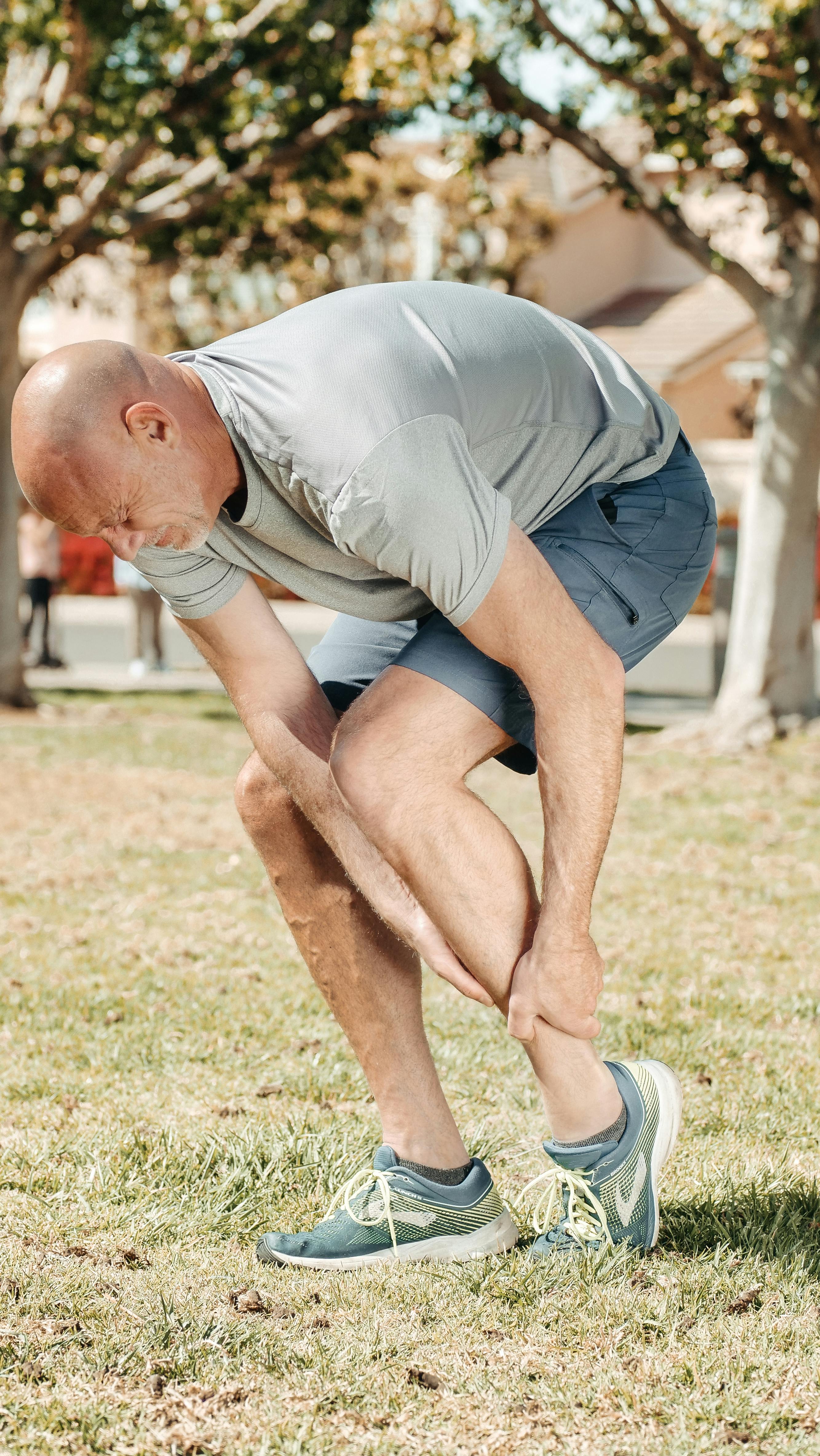
Last week, a patient in his 40s walked into my office in Southlake absolutely miserable. He'd partially torn his rotator cuff playing weekend basketball, and his ortho had basically given him two options: live with it or try surgery. He wanted a third path. That's when we started talking about BPC-157, a peptide that's gotten a reputation among athletes, biohackers, and yes, functional medicine docs like me, for helping the body heal faster from all sorts of soft-tissue damage.
But does it actually work? Or is it just another trendy compound riding the peptide wave? I've been using BPC-157 with patients for a few years now, and I've read just about every study worth reading. So let me give you the real answer. Not hype. Not fear. Just what the science says and what I see happen in the clinic.
What Is BPC-157, Really?
BPC-157 is a synthetic 15-amino-acid peptide originally derived from a protein found in human stomach juice. Researchers isolated a fragment that showed remarkable protective and healing properties across the gut, tendons, ligaments, muscles, and even the brain. It's been studied for decades, mostly in animal models, with growing human interest.
The name stands for "Body Protection Compound." Pretty literal, honestly. Croatian scientists working back in the 1990s noticed that a specific sequence of amino acids in gastric juice seemed to accelerate healing in damaged tissues. They isolated it, synthesized it, and started running experiments. What they found was striking: BPC-157 appeared to help with ulcers, tendon injuries, bone healing, even nerve damage.
Now, to be clear, BPC-157 is still considered an investigational peptide in the United States. It's not FDA-approved as a pharmaceutical. Legitimate clinics like ours use it under a functional medicine framework with compounded formulations from licensed pharmacies. For a broader look at where each compound fits, my article on peptide therapy for men's health lays out the full menu.
How Does BPC-157 Actually Help You Heal Faster?
BPC-157 accelerates healing through three main mechanisms: it promotes new blood vessel formation (angiogenesis), upregulates growth factors like VEGF and FGF, and dampens local inflammation. Put together, these effects deliver more oxygen and nutrients to injured tissue while creating the right environment for repair cells to do their job.
If you want the deeper explanation of how BPC-157 rebuilds tissue at the cellular level, I wrote a full breakdown in my article on BPC-157 and tissue repair. For this post, though, let's focus on why it speeds things up.
It Builds New Blood Vessels Where You Need Them
When you injure a tendon or ligament, one of the big problems is that these tissues have notoriously poor blood supply. That's why a rotator cuff tear or an Achilles problem can drag on for months. BPC-157 stimulates angiogenesis, meaning your body grows tiny new capillaries right where the damage is. More blood flow means more healing raw materials getting delivered.
It Boosts the Growth Factors Your Body Already Uses
VEGF (vascular endothelial growth factor) and several fibroblast growth factors are basically your body's construction crew managers. They tell cells where to go, what to build, and how to lay down new collagen. BPC-157 appears to amplify these signals, so the natural healing process runs at a higher gear.
It Calms Inflammation Without Shutting It Down
Here's something cool. Unlike NSAIDs, which blanket-suppress inflammation (and can actually impair tendon healing if used for too long), BPC-157 seems to modulate the inflammatory response. You keep the helpful parts, the signaling that recruits repair cells, but you lose the chronic, stalled-out inflammation that keeps tissue stuck in limbo.
What Injuries Respond Best to BPC-157?
BPC-157 tends to shine with soft-tissue injuries: tendinitis, partial tendon tears, ligament sprains, muscle strains, and chronic joint pain. It also has strong data for gut healing, including ulcers and inflammatory bowel conditions. Men dealing with stubborn sports injuries or post-surgical recovery tend to see the biggest functional gains.
In my Southlake clinic, I see these issues all the time from weekend warriors around the Dallas-Fort Worth area who refuse to stop playing pickleball, golfing, or lifting. The injuries that respond best in my experience:
- Tendinopathy: Tennis elbow, golfer's elbow, Achilles tendinitis, patellar tendinitis. These tendons are starved for blood flow and BPC-157's angiogenic effects help a lot.
- Partial tears: Rotator cuff, hamstring, groin. Full tears still often need surgery, but partial ones can respond beautifully.
- Chronic joint pain: Especially knees, shoulders, and hips when there's soft-tissue involvement.
- Gut issues: Leaky gut, mild IBD symptoms, and GI inflammation. The peptide was literally discovered in gastric juice, so this checks out.
- Post-surgical recovery: Some of my patients use it after orthopedic procedures with approval from their surgeons.
Where it's less useful? Acute bone fractures (though some animal data is promising), degenerative conditions that have crossed into bone-on-bone territory, and anything requiring structural reconstruction. For those cases, we look at other options like regenerative medicine with stem cells or exosomes.
How Long Does It Take to Feel Results?
Most men notice meaningful improvement within 2 to 4 weeks of starting BPC-157, with full benefits typically appearing by 6 to 8 weeks. Dose, injury severity, and whether the peptide is injected locally or systemically all matter. Early changes usually show up as reduced pain, followed by improved function and range of motion.
I'll give you a realistic picture. My basketball patient with the rotator cuff started noticing less sharp pain around week two. By week four, he could sleep on that side again. By week eight, he was doing controlled resistance work. That's not unusual. But I also have patients where the response is slower, especially if they're dealing with multiple inflammatory drivers like poor sleep, high cortisol, or underlying metabolic dysfunction.
That's the thing. BPC-157 isn't a magic eraser. If you're chronically inflamed from insulin resistance, lousy sleep, and constant stress, the peptide is fighting an uphill battle. That's why we take a functional medicine approach and tackle the whole picture.
What Does the Research Actually Show?
The bulk of BPC-157 research comes from animal studies, which consistently show accelerated healing across tendon, ligament, muscle, bone, and gut tissue injuries. Human data is limited but growing, and anecdotal clinical reports have been largely positive for safety and effectiveness. Large-scale randomized human trials are still pending.
Let me be straight with you: I hate when people quote "studies" and don't actually know what those studies looked at. Most of the solid BPC-157 research has been in rats and mice, looking at things like Achilles tendon transection models, where researchers literally cut the tendon and measured healing time. In those models, BPC-157 treated animals consistently heal faster with better tensile strength than controls.
The human side is thinner but not empty. There are case reports and small clinical series showing benefit for tendinopathies and GI issues. No published data has linked systemic BPC-157 to cancer, organ damage, or serious adverse events, which is reassuring. But we need larger controlled human trials, and they're finally starting to roll out.
For a comparison to another well-studied healing peptide, check out my piece on TB-500 for faster recovery. TB-500 and BPC-157 are often stacked together, and they work through complementary pathways.
Is BPC-157 Safe?
Current evidence suggests BPC-157 has an excellent safety profile, with no serious adverse events documented in clinical use at standard doses. Mild injection site irritation, transient nausea, or lightheadedness are the most common side effects. Still, it should only be prescribed and monitored by a qualified medical provider.
I want to be real here. Just because something is safe in the studies we have doesn't mean you should order powder off some sketchy website and inject yourself. Quality matters enormously. The peptide has to be pure, properly reconstituted, and dosed correctly. Underground compounds can be contaminated, underdosed, or straight-up fake. I've seen patients come in after DIY peptide experiments with zero results, because they were injecting saline with food coloring.
At a legitimate clinic, we source peptides from licensed compounding pharmacies, verify lot testing, and monitor labs and symptoms through your treatment course.
How Do We Use BPC-157 at Magnolia Men's Health?
At Magnolia Men's Health in Southlake, I typically start patients on BPC-157 at 250 to 500 mcg subcutaneously once or twice daily, depending on the injury and goals. For localized issues like a specific tendon, we sometimes do targeted injections near the site. Courses usually run 4 to 8 weeks with reassessment.
Every guy I work with gets a full workup first. We're not just handing out peptides. I want to see your baseline labs, understand your sleep, stress, and metabolic health, and map out what else might be slowing your healing. Sometimes the real answer is a combo approach. Maybe BPC-157 plus growth hormone-supporting peptides like ipamorelin and CJC-1295. Maybe BPC-157 plus optimizing your testosterone if you've been struggling with recovery for other reasons.
And for my DFW patients, the nice thing is we can usually do this without disrupting your life. Most of the time BPC-157 is a simple subcutaneous injection you can do at home with a tiny insulin needle. It's genuinely easier than most people expect.
Frequently Asked Questions About BPC-157
Can you take BPC-157 orally?
Yes, oral BPC-157 capsules exist and are the form of choice for gut-specific issues because the peptide can survive stomach acid and act locally in the GI tract. For systemic injuries like tendons or joints, injectable forms are more effective because absorption is higher and more predictable.
Will BPC-157 show up on a drug test?
BPC-157 is not currently screened by standard drug tests or most sports anti-doping panels. However, WADA has listed it under their prohibited substances as an S0 unapproved substance, so competitive athletes should check with their governing body before using it.
Can I use BPC-157 alongside testosterone therapy?
Absolutely. There's no known interaction between BPC-157 and testosterone replacement therapy. Many of my patients on TRT use BPC-157 during injury recovery phases. If anything, the combination tends to support better overall recovery because testosterone itself plays a role in tissue repair.
How much does BPC-157 cost?
Cost varies by pharmacy and dosing protocol, but most patients spend between $150 and $400 per month during an active treatment course. That usually includes the peptide itself, syringes, and clinical oversight. Insurance does not cover peptide therapy since these are compounded formulations.
Can women use BPC-157 too?
Yes. While our clinic focuses on men's health, BPC-157 works the same way regardless of sex. It's not a hormone, so there are no sex-specific effects. The healing mechanisms apply equally to men and women.
Ready to See If BPC-157 Is Right for You?
If you've got a stubborn injury that isn't healing, chronic tendinitis that's been nagging for months, or you just want to recover faster from training, BPC-157 might be part of the answer. But it's not a one-size-fits-all solution, and it works best when we understand your full health picture first.
I'd love to sit down with you and figure out whether this is the right tool for your situation, or whether we should be looking at something different. You can book a free consultation with me and we'll talk through it. No pressure, no hard sell. Just a conversation between you and a doctor who actually cares about getting you back to doing what you love.